Showing posts with label Attack. Show all posts

Thursday, October 13, 2011

Prime minister says Egypt 'scrambling' after at least 23 killed in clashes

From Mohamed Fadel Fahmy, for CNN

October 10, 2011 -- Updated 0855 GMT (1655 HKT)

Cairo (CNN) -- Egyptian Prime Minister Essam Sharaf said Monday that clashes hours earlier between army forces and pro-Coptic Christian protesters had "brought us back" to the tense, violent period at the onset of the recent revolution.

"Instead of going forward, we found ourselves scrambling for security," Sharaf said on state television in an early morning speech, noting that the incident had produced "martyrs, both civilian and from the military."

The bloodshed in Cairo occurred just over a week after the burning of a Coptic Christian church in southern Egypt. The burning prompted the Sunday protest demanding equality and protection of Coptic places of worship.

Dr. Sheriff Doss, the head of Egypt's chief association of Coptics, said 17 civilians died and 40 were injured.

An additional 12 army troops were killed and over 50 were injured, according to Lt. Col. Amr Imam, an army spokesman.

Meanwhile, health ministry spokesman Adel Al Dawi said late Sunday that there were a total of 23 people dead and more than 180 injured.

The protesters -- many of them Coptics or supportive of their cause -- said they had been marching peacefully toward the Egyptian state television building when the violence erupted.

"Suddenly, we were attacked by thugs carrying swords and clubs," one protester, Magdi Hanna, told CNN.

According to Alla Mahmoud, an interior ministry spokesman, some protesters began "firing live ammunition at the army."

"This is the first time protesters fired at the army," added Imam, the military spokesman. "There must be a hidden hand behind this. Egyptians don't do that."

Mohammed Abdel Jabaar, a spokesman for the Egyptian Rebels Coalition that claims to have been part of the movement that led to former President Hosni Mubarak's ouster, blamed "interference from outside" for spurring the violent chain of events.

The January 25 youth revolution coalition, which has been involved in various anti-government protests including Sunday's demonstration, denied that any participants shot at the Egyptian forces.

Samir Bolos, one of the demonstrators, added Sunday that "some unknown people may have fired at the army, but not us."

Witnesses said the army forces fired on the protesters near the state television headquarters. Meanwhile, military trucks could be seen burning on the street.

Hundreds of demonstrators also went to Tahrir Square, the hub of the revolutionary movement earlier this year, according to Bolos. He claimed military police stormed the square with sticks, while protesters fought back with rocks.

A curfew has been imposed for between 2 a.m. and 7 a.m. Monday around Tahrir Square and central Cairo, said Imam.

Egypt's National Justice Committee also plans to hold an emergency meeting Monday involving representatives from the Supreme Council of the Armed Forces, the al-Azhar mosque and the Coptic church to discuss the developments, prime ministry spokesman Mohamed Hegazy said. Those talks will be held in the prime minister's building.

Meanwhile, state TV reported Sunday night that Ahmed al-Tayyeb, a prominent Egyptian Muslim leader and grand imam of Al-Azhar, has been reaching out to Coptic church leaders in hopes of containing the crisis.

The protests and clashes follow the September 30 burning of the Mar Girgis church in Edfu, a city in Aswan governorate in southern Egypt.

That attack marked the latest of several examples in which Coptic Christians have been targeted in the North African nation.

About 9% of Egypt's 80 million residents are Coptic Christians. They base their theology on the teachings of the Apostle Mark, who introduced Christianity to Egypt, according to St. Takla Church in Alexandria, the capital of Coptic Christianity.

The religion split with other Christians in the 5th century over the definition of the divinity of Jesus Christ.

In Egypt, they have been targeted of late, including the New Year's Day bombing of a Coptic church in Alexandria that left 23 people dead. There have also been sectarian clashes, including one in Cairo on May 7 in which at least 12 people were killed.

The U.S. Commission on International Religious Freedom, an independent bipartisan federal agency, earlier this year added Egypt to a list of countries named as the worst violators of religious freedom.

Sunday's incident also marks the latest skirmish between protesters and government forces.

An incident last Tuesday outside a military court in Nasr City resulted in the arrests of two protesters. Journalists covering the demonstration were assaulted, according to witnesses.

The same day, military police fired shots into the air to disperse about 400 pro-Coptic demonstrators who had attempted to stage a sit-in in front of the state television building after marching through the streets of Cairo.

http://edition.cnn.com/
http://edition.cnn.com/2011/10/09/world/meast/egypt-protest-clashes/index.html


Share

Cairo clashes claim more victims

Updated October 10, 2011 14:27:00

Source: The World Today | Duration: 7min 19sec

ELEANOR HALL: But we go first today to Egypt's capital Cairo which is in the midst of some of the worst violence since the ousting of Hosni Mubarak in February.

At least 24 people have been killed and more than 200 injured in clashes between Coptic Christians and security forces. And as we'll hear, many died from horrific injuries that suggest they were run over by armoured vehicles.

The Christians had been demonstrating about a recent attack on one of their churches by Islamic extremists.

The Egyptian cabinet has now called an emergency meeting for tomorrow, vowing the violence won't derail next month's parliamentary elections.

I spoke a short time ago to our Middle East correspondent Ben Knight who's in Cairo.

Ben, just update us on the situation there now. The government has imposed a curfew. Has that calmed the violence?

BEN KNIGHT: Well, yeah. The violence did calm down probably about an hour or so before that although as we were making our way back from the Coptic hospital towards the hotel, it was a pretty long trip because the roads were being blocked by sometimes by police other times in one instance by a very large mob of young men carrying homemade weapons.

So look, it is calm but it is certainly still very tense.

ELEANOR HALL: We're hearing reports of horrific injuries suggesting that some people were crushed by tanks. When you were at the hospital earlier, from what you saw, was that possible?

BEN KNIGHT: I would say it was very possible. We went inside the morgue at the hospital where I saw 17 bodies and I saw the injuries and without getting too graphic, the faces that were caved in, trauma to the body that was caused by not just a blunt instrument but a very large blunt instrument.

Now it is not my place to speculate but before we actually went down to see the protest for ourselves we were watching live pictures on Arab TV of military vehicles, police or army vehicles driving through the crowd of protesters.

ELEANOR HALL: Why do you think the army has cracked down so heavily on these protests?

BEN KNIGHT: Well, there is a bunch of conspiracy theories running around Cairo at the moment. First of all the army promised that it would maintain the security and the safety of Egyptians. You know, the safety and security of the country while it oversaw the transition to democracy. So any kind of protest is a challenge to that and it doesn't like them.

Now having said that there are a number of protests going on pretty much every day around this city but this was a protest by an extremely angry group of Coptic Christians for the attacks at their churches and that their members have come under.

So not only that but it was a march on the offices of state television. Now that's significant because this is seen as a real symbol of the old regime and also of the new one. State television is still functioning as state television and still operating very much in the mould that it was under Hosni Mubarak. It is still toes very much what the government tells it to.

I was watching state television as the protests were going on and it was talking about the number of security forces that had been killed - three at that time. Not a single mention of any injuries, not a single mention of any deaths among the protesters and the broadcasters blaming foreign provocateurs and all those sorts of things.

So the march on state television was significant and that is a building that the Mubarak regime and the army have been very, very careful to protect all the way through.

There aren't many buildings in Cairo that are still surrounded by machine guns but that's one of them.

ELEANOR HALL: Now you say that state television was reporting that three soldiers were killed. What have you been able to confirm about the casualties?

BEN KNIGHT: Nothing on the police or the military side but when I was at that hospital there were 17 bodies in that morgue and I don't know how many people were injured in the emergency room and other parts of that hospital.

Now I don't know if that is the extent of the casualties because while we were there the military came to the hospital and it was impossible for anyone to get in or out and there were clashes going on in the streets outside the hospital.

Now I should point out that this hospital is not near where the protests were. It is about four or five kilometres away, a different part of Cairo so the injured and the dead were taken there then the army went to, it went to the hospital.

So before that happened there were 17 bodies in that morgue that I saw myself. I don't know if there will be any more turning up.

ELEANOR HALL: How destabilising is this sort of thing for the government as it prepares Egypt for its first post Arab Spring parliamentary elections next month?

BEN KNIGHT: Well, look there are some people who would argue that this was in fact instigated by the government. As I said there are a lot of conspiracy theories running around and while I don't normally entertain those, that is something that is very much being discussed here. There is a view that the military does not want to pass on power. It is not serious about taking the country to elections and that this kind of instability is being ignited by the military itself so it has an excuse to crack down and to hang onto power and to push the elections out.

Now there is no evidence of that but that is something that a lot of people here are talking about. Now it has to be pointed out that this is not necessarily violence between Muslims and Christians in Cairo itself although that is not unheard of but this sort of thing tends to happen in the more rural areas but what the Christians have been saying is that it has been incited, that particularly the governor of the province of Aswan has been inciting this violence against them and the military council is doing nothing to stop it.

They want the governor removed, they want the military council to protect them and they say that they are not doing that and that's why you are seeing these very angry protests this week. One of the churches was burnt down last week and that's what sparked this.

ELEANOR HALL: Well, the Egyptian cabinet has called an emergency meeting. If what you're suggesting is that there is a lot of concern that it is the government in fact inciting this violence, what is that emergency meeting likely to achieve?

BEN KNIGHT: Well, I don't know but I think it will be very interesting to see what happens on the streets of Cairo tomorrow morning local time which is some hours from now. Are there going to be more Coptic Christians out there protesting on the streets? I wouldn't be surprised. There was a lot of anger at the hospital that I was at.

I think you are going to find a very strong security presence but also, it will be I think, don't be surprised to see Egyptian Muslims out there marching alongside the Christians as well because that is certainly what we saw earlier in the week at the other protest.

There are a lot of people in this country who don't like the sectarian violence, don't like the sectarian divisions that are sort of bubbling to the surface at the moment. Look, it is impossible to tell but I can tell you that there are going to be a lot more police and military police on the streets tomorrow than there were today.

ELEANOR HALL: Ben Knight in Cairo, thank you. That's the ABC's Middle East correspondent Ben Knight speaking at about 2am his time.


http://www.abc.net.au/
http://www.abc.net.au/news/2011-10-10/cairo-clashes-claim-more-victims/3459396?section=world


Share

Wednesday, October 12, 2011

Islam's war on the Cross: Egypt's move to democracy under threat after latest attack on Coptic community

Christians in Egypt are used to persecution, but this week's deadly attacks on a Copt demonstration threaten the country’s move from military rule to democracy.

By Con Coughlin

9:17PM BST 11 Oct 2011

In the 19 or so centuries since Christianity first took root in Egypt, the ritual of mourning has become an all-too-familiar experience for the majority of the country’s Coptic community. Egypt’s eight million Copts may claim to be their nation’s oldest surviving indigenous faith, but that has not spared them from prolonged periods of persecution, most recently at the hands of Islamist militants.

In many respects, the tone was set for nearly two millennia of oppression of the Copts, one of the world’s oldest Christian sects, by the martyrdom of St Mark the Evangelist, the disciple who established the Christian faith in Alexandria just a few years after the ascension of Christ.

The establishment of a new religion was bitterly resented by the city’s pagan population, who feared it would turn Alexandrians away from the worship of their traditional gods. They exacted their revenge on Easter Monday in 68 AD when Roman soldiers put a rope around St Mark’s neck and dragged him through the streets of Alexandria until he was dead.

These days the methods used to persecute Egypt’s Copts might not be so primitive, but their overall effect is no less barbaric. During the latest outbreak of Coptic-related violence in Cairo on Sunday night, several Copts are reported to have been crushed to death by the tracks of an armoured military vehicle that ploughed into a group of protesters as they sang hymns and held aloft the Cross.

The roots of the current wave of anti-Coptic violence are murky. At first it was assumed that Islamist militants, who have waged a vicious campaign of intimidation, sparked the unrest by burning down a church in the southern province of Aswan. This attack was the latest in a series of clashes between Muslims and Christians, which began when 21 worshippers were killed as they left mass at a Coptic church in Alexandria on New Year’s Eve.

Thousands of Copts descended on the state TV building in Cairo on Sunday to protest against what many Christians regard as the growing strength of ultra-conservative Islamists since the overthrow of former Egyptian dictator Hosni Mubarak in February. But the uncompromising response of the Egyptian authorities, which resulted in government forces firing live rounds at stone-throwing protesters, has prompted accusations that the army, which has interim control of the country, is deliberately fostering sectarian hatred in order to disguise its own plans to maintain control of the country.

Following the high-profile protests in Cairo’s Tahrir Square earlier this year – during which Muslim and Coptic protesters joined forces to demand the overthrow of President Mubarak – the Supreme Council of the Armed Forces assumed responsibility for creating a modern, pluralistic democratic state following decades of authoritarian rule.

But the delays that have hindered plans to hold fresh parliamentary and presidential elections – they are now due to start at the end of next month – have led many to conclude that the military, which effectively ran the country during the Mubarak era, has no real interest in establishing democratic institutions. And what better way to abort the transition from military to democratic rule than to instigate nationwide sectarian violence?

As one Coptic protester commented in Cairo yesterday: “This is not about Muslim-Christian hatred. It is about the army trying to start a civil conflict for its own reasons, and we all know what those reasons are.”

Certainly the vitriolic language used by state-controlled broadcasters during coverage of the protests undermined the interim government’s claim to represent the interests of all Egyptians, Christians and Muslims alike.Newsreaders appealed for “honest Egyptians” to protect their soldiers against Christian “mobs”, while the Copts were denounced as “sons of dogs”, despite the fact many moderate Muslims, who want Egypt to be free of sectarian divisions, supported the protesters.

But then Egypt’s Copts are used to state-sponsored persecution. Tens of thousands of Copts fled the country in the 1950s after Colonel Gamal Abdul Nasser nationalised Egypt’s private businesses, most of which were owned by Christians. Today it is estimated that two out of three Egyptians living in Britain are from Christian families. Egyptian communities in northern Europe, North America and Australia are also disproportionately Christian.

Nor is the persecution of religious minorities in the Middle East confined to Egypt’s Copts. One of the more alarming trends of recent years has been the violent persecution of Christians throughout the region.

In Iraq, for example, the overthrow of Saddam Hussein’s regime in 2003 was supposed to herald a new era of sectarian harmony. Instead a wave of al-Qaeda-related attacks has had a devastating impact on Iraq’s once-thriving Christian community, which numbered around 1.4 million 10 years ago, but has now declined to around 400,000.

As in Egypt, the exodus was hastened by a series of grotesque attacks on Iraqi churches, the worst of which was the suicide bomb attack on the Church of our Salvation in Baghdad at the end of last year, which killed 58 people. To mark their contempt for the Christian faith, the al-Qaeda bombers blew themselves up on the altar, together with a child hostage.

Not all the persecution of Christian minorities is as violent as that experienced in Iraq, but the refusal of even pro-Western countries such as Saudi Arabia to tolerate any expression of Christianity has forced believers to practise their faith in private. There are an estimated one million Catholics in Saudi Arabia, most of them guest-workers from the Philippines, but they risk immediate expulsion if they are found observing their religion.

In Iran, meanwhile, the persecution of Christians that began with the 1979 Islamic revolution resulted in a Christian pastor being sentenced to death in the provincial town of Rasht earlier this month for refusing to renounce his faith. The ayatollahs’ refusal to countenance any other faith has also resulted in an upsurge in the persecution of the country’s Baha’i sect, the world’s youngest monotheistic faith.

Much of the blame for the deterioration in relations between Islam and Christianity in the region can be laid at the door of the growing legions of Islamist militants who refuse to acknowledge the other main monotheistic faiths. They point to the comment made by the Prophet himself on his deathbed, when he instructed his followers that only one faith – Islam – could be tolerated in Arabia.

This interpretation is disputed by moderate Muslims – such as those who joined the Copts for Sunday night’s protest in Cairo – who argue that Islam is a tolerant faith, which allows for peaceful co-existence with other religions.

Unfortunately for Christians in the Middle East, this is increasingly the minority view among the region’s ruling elites, which are no longer prepared to recognise basic rights of their citizens, such as freedom of worship.

Arguably the most extreme example of this intolerance has been seen in Sudan, where decades of mistreatment of non-Muslims by the conservative Islamic government in Khartoum resulted earlier this year in the secession of the country’s Christian population to form South Sudan. The new state, which is the size of France but has just 38 miles of paved roads, is the world’s poorest, but simply to be free of the tyranny of their former Islamic rulers is reward enough for the new country’s four million Christian inhabitants.

The break-up of neighbouring Sudan will serve as a warning to the military authorities in Cairo, who should be mindful of St Mark’s remark that “Every affliction tests our will”. The current wave of persecution directed at Egypt’s Coptic community constitutes not only a major test of the interim government’s ability to maintain order, but also of its desire to establish a government that represents the interests of all Egyptians, irrespective of their creed.


http://www.telegraph.co.uk/
http://www.telegraph.co.uk/news/worldnews/africaandindianocean/egypt/8820550/Islams-war-on-the-Cross-Egypts-move-to-democracy-under-threat-after-latest-attack-on-Coptic-community.html


Share

Egypt: army faces crisis over killing of Christian protesters as deputy prime minister resigns in protest

As violence raged across the Egyptian capital on Sunday night, the photograph of a woman clutching the hand of her dead fiance in a Cairo morgue was the most striking of many portraits of the perils facing the country's Christian minority.

By Richard Spencer, Middle East Correspondent

6:48PM BST 11 Oct 2011

By on Tuesday, the internet and the social networking site Twitter were circulating before-and-after images of the couple, comparing the picture taken in the morgue with one taken on the day just two months ago when they announced their engagement.

"They were going to get married in two months' time," said Noov Senary, a friend of the couple who identified them to The Daily Telegraph as Michael Mosaad and Viviane Magdy, both Coptic Christians. "Michael died on Sunday. When I got to the morgue, Viviane was already there."

The army, which has run Egypt since the downfall of President Hosni Mubarak, is facing its worst crisis yet over its role in the violence, which began when Christians staged a march to the state television station in the centre of the city.

The station initially broadcast appeals for help for the army, saying it had come under attack from an armed mob of Christians who had killed three soldiers.

Almost immediately that story began to unravel, as it became clear that it was the Christians, protesting peacefully, who had first been attacked by a mob many accuse of being instigated by either the army or supporters of Mr Mubarak.

The army then over-reacted dramatically, shooting at protesters and driving army vehicles over them, scenes caught on video posted online. At least 25 people, mostly Christians, were killed.

On Tuesday, Hazem el-Beblawi, the finance minister and deputy prime minister, resigned in protest at what had happened. The army said it would use the "full weight of the law" against trouble-makers without responding to criticism of its own role.

The violence has outraged the country's Coptic minority. Its head, Pope Shenouda, issued a rare statement condemning the government, while after a midnight funeral attended by 20,000 people mourners marched to Tahrir Square with the body of Mina Danial, an activist who had taken part in the anti-Mubarak protests earlier this year.

He had told friends that he wanted to be buried on the square, the most redolent single symbol of the "Arab Spring".

Mr Mosaad and Miss Magdy were researchers on a project run by the Egyptian Organisation for Human Rights monitoring media coverage of next month's parliamentary elections.

Miss Senary, who works for the same organisation, said she and Mr Mosaad were taking part in the march on Sunday, which was being staged in protest at the burning of a new church in southern Egypt.

"I was told on my phone by my manager that Michael had been killed," she said. "I went to the hospital and saw Viviane there." Both he and Mr Danial had been hit by an army patrol vehicle.

Other witnesses said that as the photographers took her picture, Miss Magdy, weeping in a room that held the bodies of five other dead Christians, refused to leave. Yesterday she posted an entry on one of several Facebook pages dedicated to the memories of Mr Danial and her fiance.

"They had known each other for a long time, but they were still so young," Miss Senary said.


http://www.telegraph.co.uk/
http://www.telegraph.co.uk/news/worldnews/africaandindianocean/egypt/8820786/Egypt-army-faces-crisis-over-killing-of-Christian-protesters-as-deputy-prime-minister-resigns-in-protest.html


Share

Tuesday, October 11, 2011

Cairo witnesses blame security forces for bloodshed at Coptic march

Four witnesses give their accounts of the violence that left 26 people dead and 500 injured after a march by Coptic Christians

Haroon Siddique
guardian.co.uk, Tuesday 11 October 2011 17.21 BST

Eyewitness testimonies have been emerging that contradict the official accounts of the violence at a march of Coptic Christians in Cairo that left 26 dead and more than 500 injured.

Egyptian state television initially blamed the bloodshed on protesters, who it said had attacked security forces. There were also attempts to portray the violence as sectarian in nature.

But more and more people who were caught up in the violence have been coming forward to point the finger of blame squarely at the security forces, who they say employed brutal tactics to suppress the protest.

Here is the testimony of four people who were involved.


Sherief Gaber, 27, recent graduate

I joined the march because I absolutely agreed with what it was asking for – at the bare minimum some sort of recognition for the church that had been burned and some real action from the government that is claiming to have an interest in protecting minorities – and so I couldn't sit by and watch this get covered up like the last however many incidents of church burning and the like …

The vast majority were Coptic Christians protesting but there were Muslims and others there for sure, especially once the march got into downtown and once the events started to unfold …

It [the mood] was a mix both of excitement and anger. People were emboldened by the turnout. It was a very large march but they were also, you have to understand, incredibly upset – a church had been burned with kind of no recognition and furthermore the first protest that set itself in front of the TV building had been violently dispersed in a matter of hours by the army.

So people were upset but also felt encouraged by the numbers … and what these kind of numbers could bring as far as a result, pressure-wise … We were actually accosted briefly going through an underpass at the beginning of the march.

There were some stones thrown but it resolved itself fairly quickly. It seemed that wasn't a concerted effort to stop the march … We arrived in the area of the state TV building and in order to get there, there were two routes the march could take and in fact did [take], around the Ramses Hilton to get to the state TV building.

There was a short side street behind the hotel that leads to the TV building so I went with some friends. We decided to walk that route and go with the contingent of the marchers there to see the people who were already standing in front of the building.

But we hadn't even reached the building before screaming began and soldiers just came rushing at us with riot shields and batons. It was completely unprovoked from what I saw.

There were dozens of families there. There were women, children, grandparents. These were families coming out [to protest] so it was just bedlam at the beginning.

Many people were screaming, women were crying and running almost immediately and add to that the fact once the beating started with sticks, within a few minutes we started hearing gunfire which it seems like – from some of the casualties I saw – were not blank rounds.

They were live rounds being used very, very quickly. It was an incredibly violent show of force … it was chaos for a while.

It was absolutely enraging. Within a few more minutes people had moved backwards towards the Ramses Hilton, the large street in front of it and were setting up some barricades there to stay there.

But all of a sudden several of those sort of armoured personnel carriers driven by military personnel started running up and down the streets through the crowds, deliberately zigzagging and aiming at the people, which was probably one of the most horrific things I've seen, if not the most horrific thing I have seen, in this revolution so far.

At one point I saw some young kids running behind a car to avoid the armoured car which then ploughed over the private automobile to hit these people. It was barbaric. It was really, really disgusting.

It lasted for hours and hours. What brought it to an end was just [a] complete crackdown on the entire downtown area. The state TV, in addition to spreading their normal lies and propaganda, was actually calling on citizens to come down and defend the army so at one point we had a mix of army and central security forces and these "citizens", so to speak, coming and attacking us with stones, weapons, teargas.

This lasted until attrition took over and people couldn't do it any more, until everyone had been beaten out of the area.


Mos'ab Elshamy, 21, pharmacy student and freelance photographer

I joined the march as a Muslim who went in support of the Christians who were peacefully protesting against the recent destruction of a church in Aswan, which wasn't the first time in Egypt [that this had happened].

It was a very friendly and peaceful march and I went there along with a lot of Muslims to be in support of the march and what I saw was [the] army lose control and dispersing the march with horrific brutality.

I saw the army shoot at people and chase them and run over them [with] APCs [armoured personnel carriers] and their vehicles and turn a really beautifully peaceful march into a horrific massacre …

What I saw was, all of a sudden, people running away and I heard loud gunshots in the air with the army and police chasing them [protesters] in the alleyways and side streets.

Then, when we came back to the scene, they were lying on the ground and blood had been spilled and people were trying to defend themselves by throwing rocks back [at the police and army] …

The [only] … violence [by protesters] was just like … normal … just a couple … of troublemakers … But no one – as the army claimed – had machine guns or started shooting as they claimed and no one shot at the police as the state TV claimed …

It was absolutely horrific. It was something I have never seen in my life in Egypt and, to be honest, I never thought I would see such things.


Steve Nabeel, 22, computer engineering student

I started to walk from Shubra. I was not alone. I had some of my friends with me. We walked through Shubra and then we reached Maspero [the building that houses state TV].

When we reached Maspero there were 2,000 activists waiting there. We started to shout and just when we arrived we saw stones thrown. The stones were coming from the army side. After that the army started to hit protesters with sticks.

The protesters started to run away. Then it started to be like a battle. Protesters started to throw back the stones and rocks and people were running away. The army started the violence. I saw it with my own eyes.

Then two army APCs started to hit protesters, running over them. People were very scared. Then I heard that the army said on the TV that Coptics were attacking the army with guns and asked people to come down and help defend the army …

Some people came to help the army so it was people against the people and the attackers thought they were attacking only Christians but there were a lot of Muslims fighting with the Coptics against the people that the army brought … I carried bodies into a building. There were very bad injuries. There were dead people.


Hossam Bahgat, 32, NGO worker for the Egyptian Institute of Personal Rights

Colleagues from my organisation, the Egyptian Initiative for Personal Rights, had already been on the scene and started calling me to alert me there were a large number of fatalities …

By the time I arrived most of the killings through shooting and through armoured vehicles of the armed forces running over protesters had already happened but there were still clashes between the military police members from one side as well as some Muslim men who were seemingly incited by, instigated by, the state television coverage to come out and defend the Egyptian army as that's what was being said on state TV.

They were firing teargas excessively at us and both sides were also pelting stones at each other. And at different points there were some clashes between Muslims and Christians on the scene, using batons and iron pipes, and, at least in one case, a sword.

I then left the scene and went to a nearby hospital, the Coptic hospital, where we were told that most of the bodies of those killed had been sent, and we were given access to the morgue of the hospital and we counted 17 bodies.

Many of them were uncovered and clearly showed the victims had been run over by vehicles. Some of them were body parts.


Share

Coptic Massacre Shows Dangers of Egypt’s New Order

Coptic Massacre Shows Dangers of Egypt’s New Order

Tuesday, 11 Oct 2011 01:58 PM

By Walid Phares

The credibility of the Arab Spring took a bloody hit on Sunday, Oct. 9, when Egyptian army forces shot dead more than 30 Christian Copts and wounded scores of them. In addition, the action by the army was paralleled by armed men, described as Salafi jihadists by Coptic sources, seen also shooting and hitting demonstrators with knives.

Having happened a few weeks from the legislative elections in Egypt, this violence impacts the debate about the Spring of Egypt but also challenges U.S. and European policies toward the current and perhaps the forthcoming government.

Can the West support — and fund — a regime that kills members of the weakest community in Egypt, months after the fall of Mubarak?

International news agencies, including The Associated Press, were late in reporting the real casualties, as Coptic sources have identified more than 30 bodies seen on the streets at the time this article was filed (40 by the latest unconfirmed account).

Hundreds of demonstrators who were protesting against the attacks on Christian churches in the south of the country were also wounded and dozens were taken to the hospitals.

According to Coptic non-governmental organizations (NGOs) and Egyptian observers, the demonstrators were marching peacefully toward the TV central building when armored vehicles from the Egyptian military deployed in the streets, and soldiers fired against the unarmed civilians. A number of demonstrators, mostly youth, burned a few military vehicles after the shootings.

The army was not alone in its suppression of the demonstrations. On the sides of the streets, bands of thugs were seen striking at the marchers with sticks and blades. In some instances, according to Coptic NGOs, armed elements described as Salafists or jihadists shot also against the civilians.

It will take a few days before arriving at an accurate number of how many were killed in the Cairo massacre, but what is clear after today is that the Copts of Egypt, about 15 million of them, are now under siege.

Persecuted historically for centuries, they have been subjected to pressures since the mid-1950s without interruption. Their churches were bombed and torched at the end of last year and even after the revolution crumbled Mubarak's regime.

It sounds as if the Arab Spring is ignoring the weakest communities in the Arab world.

Over the past few months, Copts, secular, and liberal Egyptians were outmaneuvered by the well-organized and well-funded Muslim Brotherhood and their Salafi allies.

Instead of recognizing the identity of minorities in their constitution's preamble, the Ikhwan (Brotherhood) rushed the process with the support of the ruling military council, ignoring the rights of the Copts, and set the path to so-called fast elections, ensuring an Islamist political blitzkrieg.

In addition, the jihadists, emboldened by the Muslim Brotherhood expanding influence in the country versus the seculars and civil society forces, resumed their violence against the Copts and their churches.

Ironically, the military authorities and the government they've appointed are claiming that "an outside conspiracy against the state is behind the events." Hints such as these usually mean either Israel or even the United States.

Cairo's present regime, which has sidelined the initial forces of the revolution — youth, women, liberals, and Christian Copts — doesn't want to recognize that there is a Coptic problem in Egypt. The latter would ruin the chances for the Muslim Brotherhood to seize power with international recognition but also open the files of international support to Egypt and its militaries.

The INGO Coptic Solidarity International’s leaders said "these were direct attacks against the liberty of expression of the Christian Copts in Egypt and this is unacceptable after Mubarak's fall." The Coptic INGO officials said "Egypt's spring is in the balance as the army and Islamists are killing Copts in the streets of Cairo."

Coptic activists in Egypt, as the events were taking place, expressed their frustration that the "regime, now heavily influenced by the Muslim Brotherhood, is rapidly becoming authoritarian but only against the Copts and the seculars."

In a sense this is the most dangerous event in Egypt since the fall of Mubarak, as developments are showing that the government's institutions are turning away from the liberties they've promised. It is to be expected that the U.S. Congress and the European Parliament will request and receive reports on these killings, and then have to deal with all the effects this could have on the administration's policy in Egypt.

Indeed, over the past few months, Washington has been engaging with Muslim Brotherhood representatives and preparing U.S. public opinion to accept the idea of an Islamist government in Egypt after the "rushed elections." President Barack Obama mentioned the Copts in his famous Cairo speech but the Copts are nowhere to be seen in the policies of his administration.

It looks like the administration has settled for an Egypt shared between the military and the Islamists, while civil society, bloggers, youth, and Copts will fall to a second-class citizens’ category.

But things won't be that easy and may not go as Muslim Brotherhood planners, both in Egypt and in the West, wish. Because a younger generation of Copts, there at the onset of the Egyptian Spring and, along with the solidarity of a liberal Muslim youth, this younger generation may fight for the achievements of the early Spring, refusing the military Islamists’ deal.

Shooting Coptic demonstrators on the streets of Cairo at the hands of the military who receive billions from the U.S. taxpayers will not go unnoticed. The future is open to many possibilities, "but they are all bleak" as Essam Iskandar told me.

Eskandar, a member of the revolutionary council during the uprising earlier in the year, fears the Copts and the liberals are caught between two nightmares: "either a new military order, read dictatorship, or an Islamist regime." The Arab Spring of Egypt seems falling on the heads of the Copts.

Dr. Walid Phares is the author of "The Confrontation: Winning the War Against Future Jihad," and "The Coming Revolution: Struggle for Freedom in the Middle East." He advises members of Congress and the European parliament. www.walidphares.com


 Share

Monday, October 10, 2011

US-funded Egyptian Military Kills Civilians

970 Letters and Emails Sent So Far


Today, October 9, 2011, the Egyptian Army brutally attacked a peaceful protest in Cairo, Egypt, killing at least 24 civilians and injuring at least 300. In one case, a military tank ran over a protester's head, smashing it to pieces. Mina Daniel, a youth activist who protested in Tahrir for the 18 days of the January 25th Revolution and survived, was among those killed during today's protest. Thugs have also attacked the Coptic Hospital in El-Daher, Cairo, where the injured are being treated. The protesters were made up of Muslims and Christians protesting the burning of a church in Aswan, Egypt.

During this violence, three members of the military were also allegedly killed. It is not clear who was responsible for their deaths, but SCAF has tried to pin these deaths on the Copts who were protesting. Eyewitnesses have confirmed that no protester was armed, and yet SCAF has now used this as an opportunity to pit Egyptian against Egyptian, using state television to call upon Egyptians to "protect" the army from these attacks!

Under the rule of Egypt's Supreme Council of the Armed Forces (SCAF), 12,000 Egyptians were sentenced to military court since last January. During Mubarak's rule, only 500 Egyptians were sentenced by military court. More churches were burned and the perpetrators un-sentenced under this military rule. The hated Emergency Law has been renewed, and heavy-handed censorship has brought upon the arrest of journalists and the storming of the offices of independent news media.

In the meantime, lawlessness rules the streets in Egypt, and it seems that SCAF is only uses its security forces to attack protesters and independent media, rather than to do its job to protect its citizens.

Every year, the US government gives $1.3 billion to SCAF. My tax dollars are being used to fund a ruling army that is attacking, killing and oppressing the citizens of its own country. This same army, while on one hand accepting all military aid from the US, has refused any US aid that would help build a truly free, fair and democratic country that respects the rights of all its citizens--and that could hold SCAF accountable.

SCAF has proven itself incapable of ruling Egypt and presiding over elections planned in November. It is trying to incite a civil war in Egypt, and is using the Egyptian state media to spread this message of hatred.

Do not use my tax dollars to support this regime. Use your influence and stand with the Egyptian people, not their oppressive military government. Call for a complete investigation of these criminal acts and full prosecution of those responsible at the highest levels. Egypt needs a transitional, secular civilian government that is capable of presiding over free and fair elections and legitimate constitutional changes.

The over 800 Egyptians who died during the January 25th Revolution did not die for this. Enough is enough.


http://www.petition2congress.com/
http://www.petition2congress.com/5297/us-funded-egyptian-military-kills-civilians/
Share

Sunday, August 28, 2011

Coptic Church renews calls to investigate Alexandria church bombing

Coptic Church renews calls to investigate Alexandria church bombing


Photographed by Steven Viney

Saint Mark's Coptic Orthodox Cathedral in Alexandria renewed demands Saturday for authorities to reveal who planned the bombing of the Two Saints Church that left 23 Copts dead on 1 January.

Nader Morcos of the Coptic Ecclesiastical Council in Alexandria criticized the slow pace of the investigation and lack of steps taken to compensate the families of those killed, eight months after the attack took place.

He said the Coptic Orthodox Church is demanding the intervention of the head of the Supreme Council of the Armed Forces, Hussein Tantawi, and Prime Minister Essam Sharaf to speed up the process of providing redress for the murders.

Morcos added that a lawyer has been assigned to request the attorney general call for expediting the investigation.

The lawyer for the church and the families of those killed, Joseph Malak, told Al-Masry Al-Youm that several legal procedures will be undertaken to address what he described as the deliberate slowness of the investigation.

Malak said Copts are wondering why the investigation into the killings is taking so long, and that many of them believe that religious discrimination is continuing after the revolution.

News reports have said that documents seized from the now-disbanded State Security Investigation Services after the revolution implicated ex-Interiror Minister Habib al-Adly in the attack. This information, however, has not been confirmed by any official source.


http://www.almasryalyoum.com/en/node/490463


Share

Friday, January 14, 2011

Six Christians shot, 1 fatally, in Egypt

By the CNN Wire Staff
January 12, 2011


Samalut, Egypt (CNN) -- A policeman fatally shot a Christian man and wounded five other Christians Tuesday in an attack on a train in Egypt, officials said.

The incident occurred at about 5 p.m. when a man walked onto the train, which was stopped in the station at Samalut, about 200 kilometers south of Cairo, said Maryanne Nabil Thaki, 29, one of the victims.

She said she was seated with her sister, Maggie Nabil Thaki, 25, their 52-year-old mother, Sabah Sinot Suleiman, and Maggie's fiance, 26-year-old Ehab Ashraf Kamal. They were en route to Cairo to buy an engagement ring, Maggie Thaki said.

Seated near them was an older Christian couple, Maryanne Nabil Thaki said.


The gunman walked up and down the length of the train, then walked back to two groups of people who were seated near each other and were both Coptic Christians, she told a reporter at the Good Shepherd Hospital in Samalut, where she was being treated for gunshot wounds to the leg and the chest.


The man said in Arabic, "There is no God but God," and opened fire, she said.

The shooter fled the train, but was captured later, a spokesman for the Interior Ministry said. The suspect, a deputy policeman, was identified as Amer Ashoor Abdel-Zaher Hassan. He boarded the train in Asiut and was en route to Bani Mazar, Menya province, where he works.

The older man, Fathi Saeed Ebaid, 71, of Cairo, was killed, a local security source told the state-run Egyptian news agency MENA. His wife, Emily Hannah Tedly, 61, was in critical condition, as was the mother of the two younger women, said Dr. Petra Kamal.

All five were to be flown to Cairo for further treatment, a hospital employee said.

In front of the hospital, about a dozen Copts demonstrated in support of the victims but were dispersed by police who fired a tear gas canister that broke through a fifth-floor hospital window, said hospital employee Mina Farouk.

The attack comes 10 days after a bombing killed 23 Coptic Christians outside the Church of the Two Saints in Alexandria, Egypt, an attack that unnerved Christians and led to increased security.

Relations between the Christian minority and Muslim majority within Egypt have been tense since that New Year's Day bombing.

Those troubles were evident last Friday -- the day Coptic Christians, who follow the Julian calendar, celebrate Christmas -- when police staged a large-scale security operation outside the same church.

In a show of solidarity, some Egyptian Muslims attended the Christmas services.

Still, protests have erupted almost nightly in many Christian areas of Egypt since the bombing.

Egyptian authorities have released a sketch of a man they think was the suicide bomber in the church attack. The Interior Ministry used forensic technology to re-create the face.

About 9 percent of Egypt's 80 million residents are Coptic Christians. They base their theology on the teachings of the Apostle Mark, who introduced Christianity to Egypt, according to St. Takla Church in Alexandria, the capital of Coptic Christianity.

The religion is known for its rift with other Christians in the fifth century over the definition of the divinity of Jesus Christ.

CNN's Ben Wedeman, Housam Ahmed and Amir Ahmed and Journalist Ian Lee contributed to this report.


http://edition.cnn.com/2011/WORLD/africa/01/11/egypt.attack/index.html?iref=allsearch


Share

Coptics Living in fear


This article appeared in the Whitehorse Leader on page 5 on Wednesday 12 of January, 2011


Share

Wednesday, January 12, 2011

Gathering for the Coptic Martyrs in Federation Square 7th January 2011


Gathering for the Coptic Martyrs of Alexandria 1st January 2011,
Federation Square Melbourne 7th January 2011


Share

European Parliament Discuss Copts Persecution إضطهاد الأقباط


European Parliament Discuss Copts Persecution
Copts Persecution by muslims in Egypt


Share

Copt killed and 5 others wounded in a train shooting in Samalout, Egypt

A gunman boarded a train in Samalout (Southern Egypt) and opened fire on Tuesday, killing a Copt and wounding five others

A gunman boarded a train in Samalout, southern Egypt and opened fire on Tuesday, killing a Copt and wounding five others -- four women and a man, security officials told Ahram Online.

The gunman, who was in uniform and identified as policeman Amer Ashour Abdel-Zaher, entered one of the passenger carriages and started shooting with his police gun randomly before he was arrested in the train station. He is currently being interrogated.

No motive was immediately known for the shooting. Officials said the gunman boarded the Cairo-bound train number 979 at the town of Samalout in Egypt's central Minya province. He was heading to Beni Mazar town in Minya.

The victim was identified by security as Fathi Mosaad Ebeid, 71 years old. The injured are Emily Hanna, Sabah Senyod, Marianne Zaki, Maggie Labib and Nehad Ashraf.

Later, witnesses said hundreds of Copts rallied outside Salamut's Good Shepherd hospital, where the wounded had been taken, and clashed with police, who fired tear gas at them.

http://english.ahram.org.eg/NewsContent/1/64/3680/Egypt/Politics-/Copt-killed-and--others-wounded-in-a-train-shootin.aspx


Share

Pope's call for Middle East to protect Christians sparks Egypt fury

Cairo recalls ambassador to the Vatican after what it deems 'unacceptable interference' in foreign affairs

Pope Benedict XVI was tonight at the centre of a new diplomatic storm after Egypt recalled its ambassador to the Vatican in protest at the pontiff's call for Middle Eastern governments to do more to protect their Christian minorities.

Cairo's dramatic reaction came amid reports of a further attack in Egypt in which a Christian died. The interior ministry said an off-duty policeman boarded a train in southern Egypt and opened fire, killing a 71-year-old man and wounding five other Christians, including the dead man's wife. The attack raises fears of a new wave of rioting by Christians still mourning the deaths of at least 21 worshippers as they were leaving mass at a Coptic church in Alexandria on New Year's Eve.

In a statement, a spokesman for the foreign ministry said Cairo's ambassador had been called back for consultations "after the Vatican's new statements that touch on Egyptian affairs and which Egypt considers an unacceptable interference in its internal affairs".

In a speech to diplomats accredited to the Holy See on Monday, the pope said the Alexandria bombing, coming after a string of attacks in Iraq, showed "the urgent need for the governments of the region to adopt, in spite of difficulties and dangers, effective measures for the protection of religious minorities".

Quoting from a message agreed by a synod of bishops last year that discussed the situation of Christians in the Middle East, the pope said they were loyal citizens who were entitled to "enjoy all the rights of citizenship, freedom of conscience, freedom of worship and freedom in education, teaching and the use of the mass media". He also praised European countries who had asked for action by the European Union to protect Middle Eastern Christians.

The foreign ministry's protest was echoed by Sheikh Ahmed el-Tayyib, the imam of the Al-Azhar, the leading institute of Islamic learning in the Sunni Muslim world. He said: "Protection of Christians is an internal affair and should be carried out by the governments as [Christians] are their citizens like other citizens." He added: "We reiterate our rejection of foreign interference in the internal affairs of Arab and Islamic countries under whatever pretexts."

In Rome, a senior Vatican official, said Egypt's reaction was "the proof that the things said by the pope have hit the mark". Monsignor Jean-Louis Bruguès, stressed he was speaking in a personal capacity.

John Hooper in Rome
guardian.co.uk, Tuesday 11 January 2011 20.34 GMT

http://www.guardian.co.uk/world/2011/jan/11/pope-middle-east-christians-egypt


Share

Egypt recalls Vatican ambassador over Pope's remarks

Egypt has recalled its ambassador to the Vatican for consultation after Pope Benedict XVI urged the country to do more to protect its Christian minority.

In an address to ambassadors at the Vatican on Monday, the Pope cited recent attacks on Christians in Egypt and Iraq.

An Egyptian foreign ministry spokesman said the remarks were "unacceptable".

A bomb attack on a Coptic Christian church in Alexandria on New Year's Eve killed 23 people.

"Egypt asked its ambassador in the Vatican to come to Cairo for consultation after the Vatican's new statements that touch on Egyptian affairs, and which Egypt considers an unacceptable interference in its internal affairs," foreign ministry spokesman Hossam Zaki said in a statement.

There was no immediate official response from the Vatican. However, a Vatican source told AFP news agency that the recall did not constitute "a break in diplomatic relations".

In his address on Monday, the Pope condemned anti-Christian attacks in Egypt and Iraq, saying they showed "the urgent need for governments of the region to adopt... effective measures for the protection of religious minorities".

He also called on Pakistan to repeal its blasphemy laws, which can carry a death sentence for insulting the Prophet Muhammad.

It was not the first time the Pope had spoken out over the plight of Christian minorities in the Middle East.

In his traditional Christmas Day message - the Urbi et Orbi - he called for political leaders in the region to show solidarity with Christians.

And a day after the attack on the Coptic church in Alexandria, he appealed for the "concrete and constant engagement of leaders of nations" in what he called a "difficult mission".

On Sunday in an address in St Peter's Square, Rome, the Pope voiced solidarity with Egypt's Copts, saying: "I salute the Coptic faithful present here to whom I renew my expression of closeness."

Egypt's Coptic Christian minority makes up between 7% and 14% of Egypt's 80 million people.


http://www.bbc.co.uk/news/world-middle-east-12164696


Share

Egypt train attack: Man shot dead by off-duty policeman

An off-duty policeman has opened fire on a train in Egypt, killing a Christian man, but it is unclear whether the attack was sectarian.

At least another five people were reported to have been injured in the shooting on a train between Assiut and Cairo.

Officials said at least four of those hurt were Coptic Christians.

Witnesses said hundreds of Christians later clashed with police outside the hospital where the wounded were taken.

Police fired teargas to disperse them, reports from Samalut, in Minya province, said.

Tensions between Muslims and Christians in Egypt have been high following a bomb attack on a Coptic church in Alexandria at the new year that killed 23 people.

The gunman, who officials said had boarded the train at Samalut, has been arrested.

The Egyptian interior ministry named him as police officer Amer Ashour Abdel-Zaher. Officials have not given a motive for Tuesday's shooting.

The ministry statement said the officer "opened fire on some train passengers from his pistol and ran away", adding that he was later arrested at his home.

One of those injured was reported to be the dead man's wife.

Egypt's Coptic Christian minority is estimated to make up about 10% of Egypt's 80 million people, who are mostly Muslim.

The BBC's Jon Leyne reports from Cairo that it is difficult to see how the gunmen would have known he could target Christians by boarding the train.


http://www.bbc.co.uk/news/world-middle-east-12165523


Share

Ecumenical Prayer Service


Ecumenical Prayer Service for the Coptic Martyrs of Alexandria 1st January 2011.
St, Paul Anglican Cathedral 7th January 2011


Share

Copts celebrate but mourn


Share

Wednesday, January 5, 2011

Pope condemns Egypt church attack

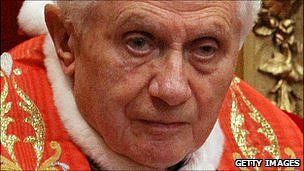
Pope Benedict XVI delivers his weekly Angelus blessing to the crowd gathered below in Saint Peter's square at the Vatican January 2, 2011


VATICAN CITY | Sun Jan 2, 2011 11:37am GMT


VATICAN CITY (Reuters) - Pope Benedict on Sunday condemned the bomb attack outside a church in Egypt on Saturday that killed at least 21 people, the latest in a string of attacks against Christians in the Middle East and Africa.

"This vile gesture of death, like that of putting bombs near to the houses of Christians in Iraq to force them to leave, offends God and all of humanity," the pope said after his angelus blessing.

Reporting by Catherine Hornby; Editing by Janet Lawrence


http://uk.reuters.com/article/idUKTRE6BU2X620110102?loomia_ow=t0:s0:a54:g12:r4:c0.386561:b40658884:z3


Share

Facebook Comments

Word of the Day

Quote of the Day

Article of the Day

This Day in History

Today's Birthday

In the News